

What if the most important wallet feature is not how quickly it signs a transaction, but how clearly it explains what that signature will do? That question separates a conventional browser wallet from a wallet designed around DeFi’s central difficulty: users are often asked to approve complex contract interactions across unfamiliar networks, with limited room for error. Rabby Wallet, developed by DeBank, approaches that problem as a non-custodial, multi-chain interface with transaction simulation and security warnings built into the workflow.
For users in Germany and elsewhere in the European crypto market, that can be a meaningful distinction. DeFi access is no longer limited to Ethereum mainnet; activity may involve Base, Arbitrum, Polygon, Optimism, Avalanche, the BNB Chain and many other EVM-compatible networks. Yet convenience can create a new risk: the easier it becomes to move between chains, the easier it is to approve the wrong contract without noticing. Rabby’s value therefore lies less in the label “multi-chain wallet” than in the checks it places between a dApp request and the final signature.
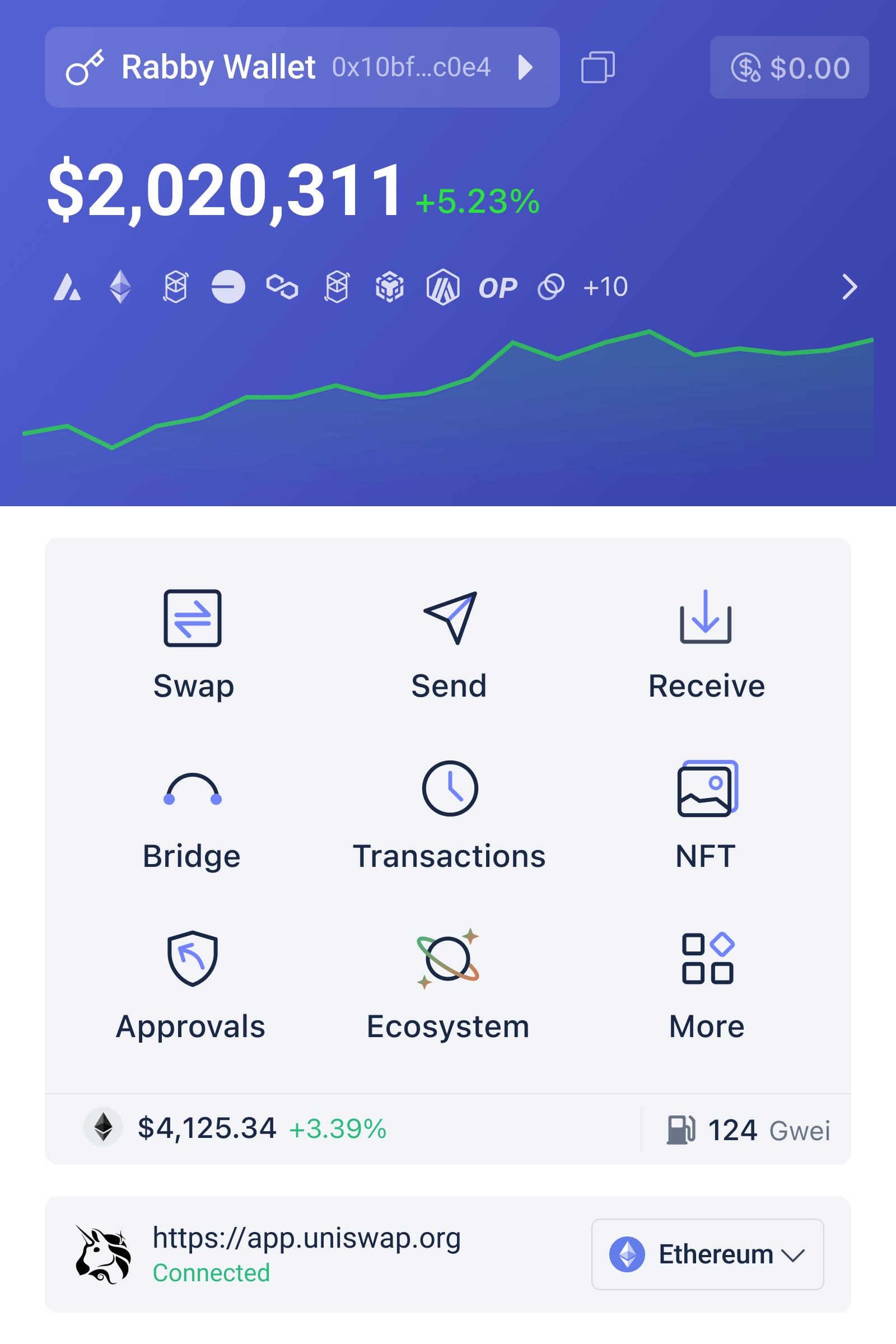
From MetaMask alternative to transaction interpreter
Browser wallets originally solved a relatively simple problem: they connected a user’s locally held keys to decentralized applications. As DeFi expanded, that model became strained. Users had to add networks manually, interpret unfamiliar approval requests, estimate gas in different native tokens, and remember which assets existed on which chain. MetaMask remains a widely used general-purpose option, but Rabby positions itself as a more specialized alternative for users who move regularly through multi-chain DeFi.
Rabby supports more than 140 EVM-compatible networks and can automatically recognize the network required by a connected dApp. That reduces operational friction, particularly when a user moves between familiar environments such as Ethereum, Base, Arbitrum or Polygon. Its integrated bridge tools, including access to protocols such as LI.FI, and its swap aggregator, which scans decentralized exchange routes including Uniswap and 1inch, extend the wallet beyond simple storage and signing.
But automation should not be confused with safety. Automatic network switching removes a common source of user error, yet it also makes the underlying complexity less visible. A prudent user should still verify the chain, asset, contract and intended outcome. Convenience is useful when it eliminates clerical mistakes; it becomes dangerous when it discourages review.
Why transaction simulation matters
The most important conceptual feature is transaction simulation. Before the user signs, Rabby attempts to show the expected changes to token balances and the likely result of the proposed transaction. This changes the wallet’s role. It is no longer merely a delivery mechanism for a cryptographic signature; it acts as an interpreter between contract logic and human intent.
Consider a liquidity interaction or token approval. The visible button on a dApp may say “Confirm,” while the underlying request could authorize a contract to spend a token, transfer an asset, or execute several linked actions. A simulation can expose expected balance changes and make an apparently routine request look materially different. This is particularly useful for detecting mismatches such as receiving an unexpected token, losing an asset, or granting a broad approval.
There is, however, a boundary condition. A simulation is an estimate of execution under particular assumptions, not a guarantee of future safety. Blockchain state can change between simulation and inclusion; external protocols can behave differently when conditions move; and a simulation cannot turn a malicious economic design into a legitimate one. Users should treat it as a powerful warning layer, not as an insurance policy.
Security architecture: useful separation, not absolute protection
Rabby’s security model combines several layers. Private keys remain locally stored under the non-custodial model and are not sent to Rabby’s servers. The software also includes a security engine that checks contracts and addresses for signals associated with phishing, known exploits and potentially dangerous infinite token approvals. The code is open source under the MIT license, allowing independent inspection and community review.
Another important design point is backend independence. Rabby does not create or alter a user’s transactions; it functions as a reviewing interface. Core signing capabilities can remain usable even if Rabby’s servers are unavailable. That separation matters because a wallet interface may provide warnings and simulations without possessing the power to take custody of the keys.
Still, non-custodial does not mean risk-free. The user remains responsible for seed-phrase security, device integrity, browser hygiene and the legitimacy of the dApp. A warning database may not recognize a new scam, and an audited contract can still be used in a harmful transaction context. Hardware-wallet compatibility with Ledger, Trezor and OneKey adds a stronger barrier around signing, but it cannot correct a user who approves the wrong action on the device.
Rabby versus a general-purpose browser wallet
The comparison with MetaMask is best understood as a difference in emphasis rather than a simple winner. A general-purpose wallet may suit users who mainly hold assets, connect to a small number of established applications or want the broadest familiarity across tutorials and services. Rabby is more compelling for users who frequently interact with several EVM chains and want transaction consequences displayed before signing.
Rabby’s advantages are concentrated in workflow: automatic network detection, simulation, warnings, hardware-wallet support, integrated swaps, bridges and the ability to use a Gas Account to pay network fees with stablecoins such as USDC when the native token is missing. That last feature addresses a practical frustration for German users who may hold stablecoins on one network but lack a small balance of ETH, MATIC or another gas token on the destination chain.
The trade-off is greater interface complexity. More information can improve decisions, but it can also create alert fatigue. Aggregated swaps and bridges add convenience while introducing dependence on routing, liquidity, fees, slippage and the underlying protocols. The best wallet is therefore not the one with the longest feature list. It is the one whose warnings and controls match the user’s actual behavior.
How to install and use Rabby more safely
Users looking to install Rabby should begin with source verification rather than a search-engine shortcut. Use the official distribution channel for the browser, desktop or mobile platform, and be cautious with similarly named extensions. A useful starting point for understanding the browser version is this rabby wallet extension guide, but the decisive security step remains checking that the installation comes from the authentic publisher and that the wallet does not ask for an unnecessary secret.
During setup, the seed phrase should be written down offline and never entered into a website, chat window or unsolicited support form. A hardware wallet is preferable for larger balances or frequent contract interaction. After connecting a dApp, pause at the review screen: check the network, the contract identity, the assets leaving the wallet, the assets expected in return, the approval scope and the estimated fees.
Rabby Points may reward actions such as swaps, gas top-ups or referrals. Such programs can make the product more engaging, but rewards should not determine risk decisions. A points incentive is not evidence that a transaction is economically sound, and chasing activity can encourage unnecessary approvals or trades. In DeFi, the safest transaction is often the one that was not executed merely to earn a badge or balance.
What matters next for multi-chain wallets
Recent product positioning in the Chrome Web Store continues to present Rabby as an open-source Ethereum and EVM wallet designed for a smooth multi-chain experience and stronger protection. The broader direction is clear: wallets are evolving from passive key interfaces into decision-support systems. If this trend continues, competition will increasingly concern the quality of transaction interpretation, not simply the number of supported networks.
The open question is whether users can understand the warnings well enough to act on them. Better simulation, clearer approval controls and more transparent bridge routing could reduce preventable mistakes. But the underlying DeFi risks—smart-contract failure, compromised interfaces, liquidity shocks and social engineering—will remain. The likely best practice is layered custody and layered judgment: local keys, hardware signing where appropriate, simulation before approval, and skepticism toward every unexpected result.
Frequently Asked Questions
Is Rabby Wallet non-custodial?
Yes. Rabby is designed so that private keys remain locally stored on the user’s device rather than being transmitted to Rabby’s servers. The user still controls the keys and remains responsible for protecting the seed phrase and signing decisions.
Does transaction simulation make DeFi transactions safe?
No. Simulation can make expected balance changes and suspicious actions easier to recognize, but it cannot guarantee that a contract is honest or that blockchain conditions will remain unchanged. It should be treated as an important review tool, not a complete security solution.
Who is Rabby best suited for?
Rabby is particularly suited to users who regularly interact with several EVM networks and value pre-signing explanations, security warnings and hardware-wallet support. Someone who only holds assets or uses one familiar application may prefer a simpler wallet with fewer moving parts.